Student personal protection should support a student’s education, independence and everyday life. For families arranging support in London or elsewhere in the UK, the starting point is a clear conversation about the student’s circumstances, preferences and the responsibilities of everyone involved.
On this page
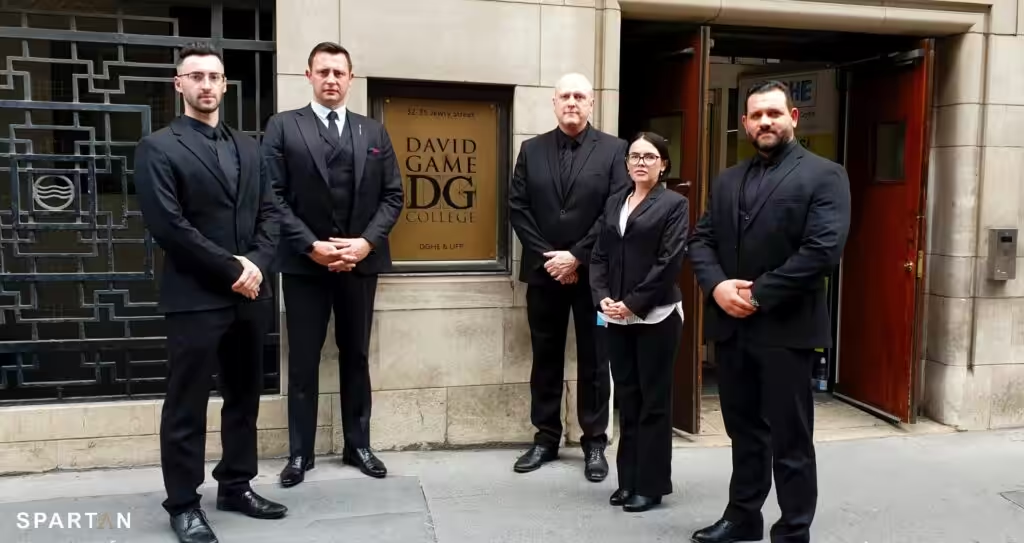
Student personal protection that supports education
Moving to another country or city to study can raise practical questions for students and their families. Accommodation, travel, unfamiliar routines and distance from home may all form part of the discussion. The appropriate response depends on the actual requirement, not on a general assumption that every student needs protection.
Security support cannot promise academic success or remove every difficulty associated with studying abroad. Its role is to carry out the agreed protective duties while respecting the educational environment and the student’s own activities.
Spartan can discuss close and executive protection in relation to a student requirement. These seven checks help establish an appropriate brief before staffing, coverage and availability are confirmed.
1. Define the student personal protection requirement
Explain the reason for seeking support and the activities that may need coverage. The requirement might concern travel, a period away from campus, public visibility or an identified issue. Describe confirmed circumstances separately from assumptions or general anxiety about a new environment.
Include the student’s age, study location and broad timetable where relevant to assessing the service. The arrangements for a child and an adult student need to be considered appropriately. The student’s views and the authority of the people giving instructions should be clear from the outset.
Student personal protection should be proportionate. Agree what the personnel are expected to do and where the service ends. A clear scope helps avoid an arrangement that unnecessarily interrupts classes, friendships or ordinary activities without addressing the actual concern.
2. Coordinate with the educational institution
Schools, colleges and universities have their own policies, access arrangements and support contacts. Identify the appropriate person to speak to about any proposed external security presence. Do not assume that a privately arranged service permits unrestricted entry to teaching spaces or accommodation.
Where safeguarding or welfare concerns arise, use the institution’s relevant procedures and contacts. Private protection should coordinate with those arrangements where appropriate; it does not replace the institution’s responsibilities or specialist support services.
Student personal protection planning should account for the practical setting. Discuss visitor requirements, the student’s timetable and any limits on external personnel attending activities. Agree who will handle coordination so that the institution receives accurate information through an appropriate channel.
3. Respect privacy in student personal protection
Clarify who is commissioning the service, who can give instructions and what information may be shared. An adult student’s privacy and choices need to be addressed directly. Family funding or an initial enquiry should not be treated as permission for unrestricted reporting about the student’s private life.
Agree the purpose, recipients and frequency of updates. Reporting can be designed around the legitimate needs of the assignment without automatically recording every friendship, conversation or movement. The arrangements should reflect appropriate consent, authority and the applicable requirements.
Student personal protection should encourage a workable relationship with the person receiving support. Discuss how the student can raise a concern, ask a question or request a review. Clear boundaries help everyone understand the service and avoid contradictory expectations.
4. Match personnel to the student and setting
Relevant experience, communication style and suitability for the educational environment matter. Discuss the student’s preferences and any language requirement. If a particular background or specialist qualification is important, state it during the enquiry and confirm the available options.
For licensable close protection work, check the appropriate individual licence using the SIA register. A training certificate is different from a current licence. Ask how checks and staffing changes are managed for the proposed assignment.
Student personal protection arrangements may benefit from an introductory conversation with proposed personnel. Discuss whether a video call or an in-person meeting is appropriate and available. Any travel, translation or specialist staffing requirement should be confirmed in the proposal rather than assumed.
5. Plan travel and accommodation responsibilities
Identify which journeys fall within the service and who arranges transport. Travel between accommodation, teaching locations, airports and private appointments may involve different contacts and schedules. Keep the brief current as confirmed plans develop.
If driving is required, discuss an executive driver and clarify the responsibilities alongside personal protection. Confirm the vehicle arrangements, authorised drivers and relevant insurance requirements through the provider. Do not assume that one person can perform simultaneous duties without reviewing the coverage.
Student personal protection away from home is also different from guarding accommodation. If a separate premises requirement exists, discuss residential security and the authority to arrange access. Campus or tenancy rules remain relevant to how any proposed service can operate.
6. Agree hours, contacts and changes
Set out the expected days and hours of support, including any periods outside teaching time. A full academic term and a short visit require different staffing discussions. Ongoing coverage needs an appropriate plan for continuity and handovers.
Choose the authorised operational contacts and explain how a change will be approved. The student, family representative and institution may have different roles. Personnel need a clear route for resolving instructions rather than choosing between conflicting informal requests.
Student personal protection should adapt through an agreed process. A revised timetable, an additional journey or a change of accommodation can affect the scope. Tell the provider early, then confirm what is available and whether the proposal needs updating.
7. Review student personal protection each term
Academic calendars change the pattern of support. A student may return home, remain in the UK, move accommodation or take part in a placement. Review the requirement before a break rather than assuming that the same service continues unchanged.
Confirm whether support ends, pauses or changes during the holiday period. If a property needs separate coverage while the student is away, establish the responsibilities and access arrangements explicitly. Personal accompaniment and residential guarding should not be treated as interchangeable.
Student personal protection reviews should include the student’s experience of the service. Consider whether the duties remain appropriate, whether communication is working and whether the arrangement supports ordinary life. Record agreed adjustments and provide the current brief to the relevant people.
Questions families and students often ask
Can the service be arranged before arriving in the UK?
Yes, an initial discussion can take place before travel. Provide the broad requirement, expected dates and an authorised contact. Share sensitive itinerary and accommodation information through an agreed follow-up channel, and confirm availability before relying on the proposed support.
Is a language preference possible?
Explain the language and communication needs during the enquiry. Spartan can discuss suitable available personnel and any additional arrangements required. Do not assume that every document or conversation can be supplied in every language without confirmation.
What if the student needs welfare or medical support?
Use the appropriate institution contacts and professional services. A security assignment is not a replacement for healthcare, counselling or educational support. The brief should explain how personnel seek appropriate assistance and coordinate within their own role if a concern arises.
How are the booking terms agreed?
The proposal should define the duties, hours, staffing, costs and important exclusions. Review confidentiality, information sharing and other contractual arrangements privately before confirmation. A general website article does not establish the terms applying to a particular student or family.
Discuss student personal protection with Spartan
Use Request Security or contact info@spartanelitesecurity.co.uk with a concise outline of the requirement. The team can discuss suitability, availability and the next information needed.
A thoughtful student personal protection arrangement starts with clear roles and respect for the student. The aim is proportionate support around education and everyday life, with practical coordination between the people authorised to take part.