Celebrity protection should make room for both public commitments and private life. A useful brief explains where support is needed, how visible it should be and who can make decisions. These seven checks focus on the working relationship behind a well-coordinated programme.
On this page
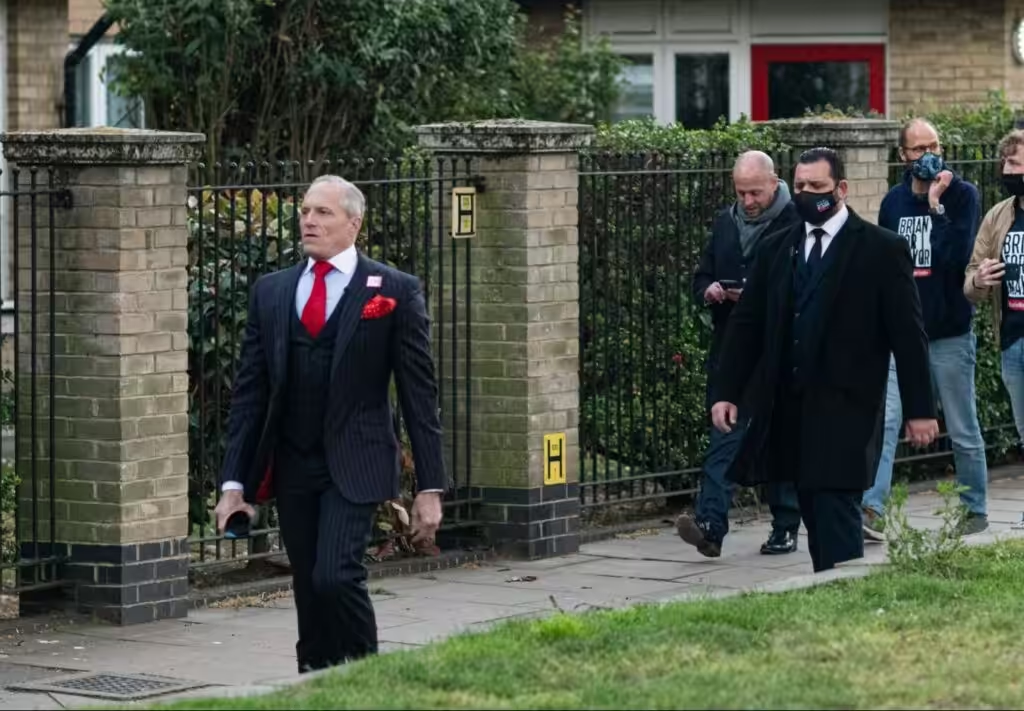
Celebrity protection that fits the person
A public profile does not create an identical requirement for every client. The person’s work, current concerns, household and preferred routines all matter. A performer on a short visit may need a different arrangement from somebody balancing regular appearances with family life.
Start by listening to the client and the people authorised to support them. An agent or assistant may know the professional schedule, while the principal has preferences about personal space and private time. Both perspectives help establish a workable brief.
Spartan’s celebrity protection service can be discussed against the actual programme. The following planning questions are general guidance, rather than details of a particular client’s arrangements or a promise that every assignment will follow the same pattern.
1. Separate public and private commitments
Mark which activities are confirmed, which are provisional and which are private. A public appearance may involve organisers, a venue and a communications team. A private appointment may require far fewer people to know the details.
Celebrity protection planning should preserve that distinction. The team needs enough information to carry out the agreed duties, but the whole itinerary should not automatically be shared with everyone who has one role in the day. Identify the information each contact actually needs.
Discuss how last-minute invitations will be handled. A request from an organiser or acquaintance is not necessarily an approved change to the programme. An agreed decision-making contact can help prevent an informal conversation becoming an unexpected commitment.
2. Agree the style of celebrity protection
Some circumstances call for a discreet presence; others may benefit from a more visible arrangement. The choice should follow the setting, the assessed requirement and the client’s preferences. It should not be based solely on a fixed image of what protection looks like.
Talk about presentation and personal space. The client should understand the proposed role, and personnel should understand how to communicate ordinary advice or a concern. A comfortable working relationship makes it easier to discuss adjustments before a misunderstanding develops.
Celebrity protection should support the person’s activities, while making any material limitations clear. If a preference affects the proposed coverage, discuss the implications calmly and agree the approach. Neither the client nor the team benefits from assumptions that have never been addressed.
3. Clarify the celebrity protection contacts
A busy programme may involve an agent, publicist, assistant, driver, organiser and household staff. Give each person a clear role in communication. Identify who maintains the current schedule and who can authorise changes to the security assignment.
A single operational contact can help coordinate questions without preventing direct communication where it is needed. The important point is that people know where an instruction comes from and whether it has been approved by the responsible person.
Agree how urgent concerns are raised and how routine updates are shared. A message sent to a large group can be overlooked or reach people who do not need the detail. Use a channel and level of information appropriate to the purpose.
4. Coordinate with venues and organisers
Explain the nature of the appearance and the responsibilities already held by the venue. Personal protection and venue security are related but different services. Confirm how they will work together rather than assuming that one team controls all aspects of the event.
Discuss the schedule, authorised contacts and any agreed arrival or departure arrangements through suitable channels. Venue staff may need practical information for their role, while the client’s private movements outside the event can remain restricted.
Celebrity protection plans should also account for changes made by an organiser. A revised running order, an added media commitment or an extended reception can affect the programme. Encourage early communication so that the implications can be reviewed before the change takes effect.
5. Include transport in celebrity protection planning
Identify who books the vehicle, who briefs the driver and which journeys fall within the assignment. The client may already have transport arrangements, or the provider may be asked to discuss an executive driver alongside protection.
Confirm the responsibilities separately. A driver and a protection officer may work closely together, but they do not automatically have identical duties. The proposal should explain the staffing needed for the actual programme and avoid relying on one person to perform incompatible tasks simultaneously.
For travel abroad, share the destination and the intended activities early. UK licensing should not be treated as automatic authority to work in another country. International travel security requires review of the relevant local arrangements and available support.
6. Set privacy and reporting expectations
Agree what information will be reported, to whom and for what purpose. The principal’s privacy remains an important consideration even when an agent, employer or family representative arranges the service. Do not assume that commissioning support gives every participant unrestricted access to personal information.
Celebrity protection may involve knowledge of private routines and professional plans. Discuss confidentiality arrangements in the booking process and keep contractual details in the appropriate private documents. Personnel should understand the agreed limits on sharing information about the assignment.
Public communication needs similar clarity. Explain who can approve photographs, references to the client or information about an appearance. These decisions should be made by the authorised people, not inferred from the fact that part of the event is public.
7. Review changes and continuity
A programme may evolve during the day or across a longer engagement. Agree how additional hours, a new location or an extra activity will be reviewed. Confirm what can be accommodated and how a revised scope or cost will be authorised.
For ongoing celebrity protection, discuss staffing continuity and handovers. The incoming personnel should receive the current brief and relevant unresolved matters. The client should know how any change of personnel will be communicated, subject to the agreed arrangements and availability.
A short review after a substantial programme can identify useful improvements. Consider whether communication worked, whether the planned duties matched the actual day and what should change next time. Keep the review focused on practical delivery and respect the privacy of the people involved.
Questions to resolve before the start
What information is useful in the first enquiry?
Provide the general requirement, preferred dates, broad location and an authorised contact. Mention existing drivers, assistants or venue arrangements that may be relevant. Detailed private movements and sensitive access information can be discussed through an agreed follow-up channel.
How are the proposed personnel checked?
Ask about experience relevant to the assignment and verify the appropriate individual licence through the SIA register where the role requires one. Discuss any specific language, background or communication needs before assuming a particular person is available.
Can the service support production work?
Yes, production requirements can be discussed, but they need to be defined. Supporting talent is different from managing every aspect of a production site. Explain the relationship with the production team and consider the talent protection service where that is the relevant focus.
Can every private moment be guaranteed?
No service can guarantee that all unwanted attention or incidents will be prevented. A useful proposal explains the agreed responsibilities, coordination and limitations. The aim is proportionate support that helps the client manage the programme with clear expectations.
Discuss your celebrity protection programme
Contact Spartan through Request Security or call 0800 933 0000. The team can discuss the requirement, review availability and explain the proposed scope before a booking is confirmed.
Celebrity protection starts with understanding the person and the programme. Clear roles, thoughtful information sharing and a practical process for changes help the service fit both public commitments and the private life around them.